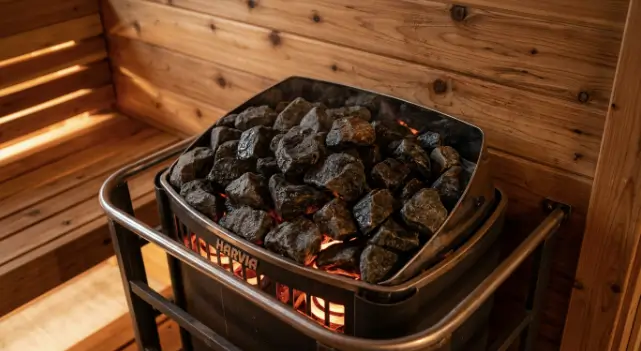
A typical 6 kilowatt home sauna heater used four times a week costs roughly $15 to $35 a month in electricity at the U.S. average residential rate of about 17 cents per kilowatt-hour, assuming each session includes a 25-minute preheat and a 45-minute soak with the thermostat cycling the elements on and off rather than running continuously. Daily use, a larger heater, or a higher local electricity rate can push that closer to $50 to $70 a month, while occasional weekend-only use often lands under $15.
How Many Kilowatt-Hours Does One Session Actually Use?
A 6 kilowatt heater does not draw 6 kilowatts continuously for the whole session, since the thermostat cycles the elements off once the cabin reaches target temperature and back on as it drifts down. Over a typical 25-minute preheat plus a 45-minute session, a well-insulated cabin usually consumes somewhere around 3.5 to 5 kilowatt-hours total, closer to the top of that range on a cold day or in a drafty cabin. A larger 9 kilowatt heater in a bigger multi-person cabin can use 6 to 8 kilowatt-hours for the same length session, simply because it is moving more air through a larger volume to hold the same temperature.
What Does That Translate to in Dollars?
At the U.S. average residential electricity rate of roughly 17 cents per kilowatt-hour, a 4 kilowatt-hour session costs about 68 cents. Four sessions a week comes to roughly $2.70 a week, or around $12 a month, before accounting for a colder climate or a less insulated cabin pushing usage higher. Rates vary considerably by state and utility, from under 12 cents in some regions to over 30 cents in others, so a household paying the higher end of that range should expect monthly costs closer to double the national-average estimate for the same usage pattern.
How Does Frequency of Use Change the Monthly Bill?
Weekend-only use, roughly two sessions a week, typically lands under $10 to $15 a month in most parts of the country. Four sessions a week, a common routine for households that treat the sauna as a regular habit, moves that to $15 to $35 a month depending on heater size and local rates. Daily use, seven sessions a week, can reach $40 to $70 a month for a larger heater, particularly in an outdoor cabin that loses more heat to the outside air than an indoor conversion does. None of these numbers include the occasional cost of replacing sauna rocks or heating elements, which are maintenance costs rather than monthly running costs.
What Cabin Factors Push the Cost Higher or Lower?
Insulation quality is the single biggest variable after heater size and session frequency. A cabin with a proper vapor barrier, tight tongue-and-groove paneling, and a well-sealed door holds heat far more efficiently than one with gaps at the joints or a poorly fitted door, and the difference shows up directly in how often the elements have to cycle back on to maintain temperature. Glass doors and windows, common in modern cabin designs, lose heat faster than solid wood and typically add 10 to 20 percent to the energy needed to hold the same temperature. Outdoor cabins in cold climates also lose more heat through the walls during winter months than the same cabin would indoors, which shows up as a noticeably higher electric bill from December through February compared with summer usage.
How Does an Electric Heater’s Running Cost Compare to Other Home Appliances?
For context, a 4 kilowatt-hour sauna session uses roughly the same electricity as running a central air conditioner for about an hour on a hot day, or a clothes dryer through one full cycle. It is a meaningful but not extreme addition to a monthly power bill for most households, and it is smaller than many buyers expect before they run the numbers themselves, since the heater is not drawing its full rated wattage continuously the way a space heater left on for hours would.
What Practical Steps Lower the Monthly Cost Without Changing Equipment?
A few habits make a real difference before anyone considers a bigger investment. Preheating with the door closed rather than cracked open cuts several minutes off the time the elements need to reach target temperature. Scheduling back-to-back sessions for multiple household members, rather than letting the cabin cool completely between separate sessions hours apart, avoids paying for a full preheat twice in one evening. Sealing any gap around the door with weatherstripping, a common fix for older cabins, reduces the steady heat loss the thermostat is constantly working to make up for. None of these changes the heater itself, but together they can trim a meaningful percentage off a monthly electric bill tied to sauna use.
Is There Research Behind Why People Use a Sauna Regularly Enough to Track the Cost?
The running-cost question usually only matters to someone planning to use a sauna often enough for it to show up on a power bill, and the research on frequent use is where most of the interest in regular sessions comes from. A widely cited review in Mayo Clinic Proceedings summarized cardiovascular and other associations tied to sauna bathing several times a week, and a systematic review in Evidence-Based Complementary and Alternative Medicine reported similar findings across a range of smaller studies on regular dry sauna use. An older review in The American Journal of Medicine covered both the benefits and the documented risks of sauna bathing, including contraindications worth knowing before adopting a frequent routine. These are population-level associations from research built largely on Finnish cohorts, not a promise of a specific outcome, but they explain why so many buyers plan for sauna use as a weekly habit rather than an occasional treat, which is exactly the usage pattern that makes the monthly electricity cost worth calculating in the first place.
How Can Someone Estimate Their Own Monthly Cost Before Buying?
The math is straightforward: multiply the heater’s kilowatt rating by roughly 0.6 to 0.8 to estimate average draw during a cycling session, multiply that by session length in hours, then multiply by the local electricity rate and the number of sessions planned per month. Retailers including Harvia, Auroom, and Sweat Decks list heater wattage clearly on product pages, which is the main number needed to run this estimate before ordering. Checking a recent utility bill for the actual per-kilowatt-hour rate, rather than assuming the national average, makes the estimate meaningfully more accurate for any specific household.
Frequently Asked Questions
How much electricity does a sauna heater use per session? A typical 6 kilowatt heater in a well-insulated cabin uses roughly 3.5 to 5 kilowatt-hours for a combined preheat and 45-minute session, which comes out to well under a dollar at average U.S. electricity rates.
Is it cheaper to run a sauna heater every day or a few times a week? Per session the cost is the same either way, but total monthly spending scales with frequency. Four sessions a week typically runs $15 to $35 a month, while daily use can reach $40 to $70 for a larger heater.
Does a bigger sauna heater always cost more to run? Usually, but not always. A larger heater in a poorly insulated cabin can cost less overall than a smaller, underpowered heater struggling to reach temperature in a drafty room, since the underpowered unit runs longer trying to catch up.
Do sauna heaters use a lot of power compared to other appliances? A typical session uses roughly the same electricity as running central air conditioning for about an hour or one clothes dryer cycle, which is a moderate addition to a monthly bill rather than an extreme one.
References
- Cardiovascular and Other Health Benefits of Sauna Bathing: A Review of the Evidence, Mayo Clinic Proceedings, 2018
- Clinical Effects of Regular Dry Sauna Bathing: A Systematic Review, Evidence-Based Complementary and Alternative Medicine, 2018
- Benefits and risks of sauna bathing, The American Journal of Medicine, 2001
By Owen Bramwell