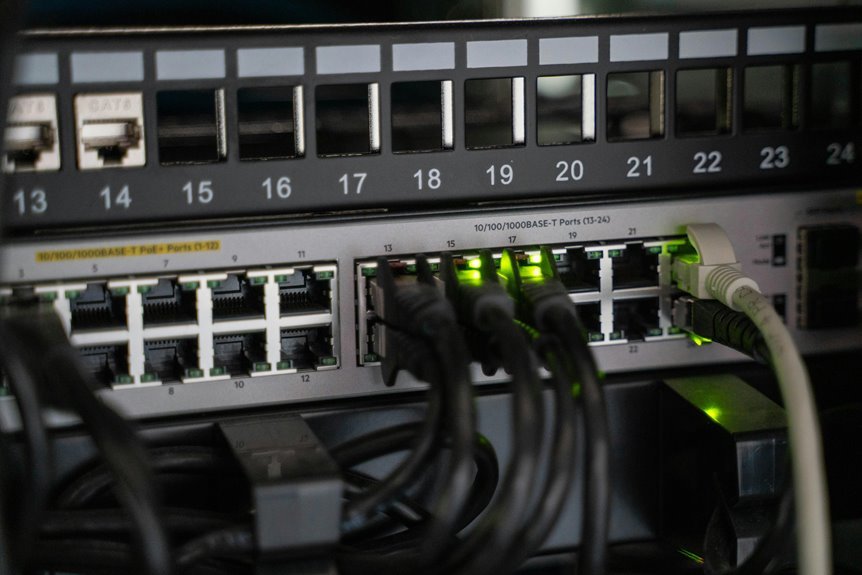
The Apex Spectrum 688113433 Market Node operates as a routing hub within a scalable market fabric. It coordinates order flow, validation, and execution signals with deterministic, low-latency pathways. Edge connectivity is robust to preserve signal integrity under peak loads. Security, reliability, and redundancy are integral, supporting automated trading and cross-exchange strategies. Latency analytics guide targeted improvements, ensuring predictable performance. The implications for integration and operations raise questions that invite careful consideration and further exploration.
What Is the Apex Spectrum 688113433 Market Node?
The Apex Spectrum 688113433 Market Node refers to a specific component within a broader market infrastructure used to direct and manage transactions. It functions as a routing hub, coordinating order flow, validation, and execution signals. This structure supports transparency and modular design, enabling scalable deployment. Two word discussion ideas: market node, apex spectrum.
How Ultra-Low Latency Connectivity Drives Trading Edge
Ultra-low latency connectivity is a key enabler of competitive trading, translating physical network performance into measurable edge. Edge latency reflects transmission speed and processing time across infrastructure, shaping decision cycles and order placement. Network topology determines path efficiency, redundancy, and collision risk. Traders leverage optimized architectures to reduce jitter, maintain deterministic routes, and preserve signal integrity under peak market loads. Freedom-oriented efficiency prevails.
Real-World Use Cases and Integration Workflows
Real-world use cases for the Apex Spectrum 688113433 Market Node span automated trading, market data dissemination, and cross-exchange arbitrage in high-density environments.
The workflow emphasizes latency analytics to quantify path delays and timing variance, enabling targeted improvements.
FPGA optimizations streamline processing, reduce jitter, and accelerate decision logic, supporting resilient, low-latency operation across diverse venues and integration stacks.
Security, Reliability, and Scalability Considerations for Trading Ecosystems
How do security, reliability, and scalability considerations shape trading ecosystems, and what concrete practices ensure robust operation across diverse venues?
The analysis outlines a security architecture that defends data integrity, authentication, and access control, while redundancy and failover support continuous availability.
Reliability engineering drives monitoring, incident response, and verifiable recoveries, enabling scalable throughput and predictable latency across heterogeneous trading venues.
Conclusion
The Apex Spectrum 688113433 Market Node stands as a meticulous hub, orchestrating order flow, validation, and execution signals with deterministic, low-latency pathways. Its emphasis on security, reliability, and edge connectivity ensures robust performance under peak loads. As latency analytics guide targeted improvements, the system evolves toward transparent, scalable trading ecosystems. Metaphorically, it acts as a finely tuned engine—purring beneath the market’s surface—delivering precision and trust in every multi-venue interaction.